Shell, Wyoming (DinoSafaris quarry)
Sarah / Sophie — The Stegosaurus
- Location Shell, Wyoming (DinoSafaris quarry)
- Formation Morrison Formation (Jurassic)
- Season 2003–2004
The Sarah / Sophie Stegosaurus is one of the most complete Stegosaurus specimens known to science — and the story of how it came out of the ground at Shell, Wyoming begins a season before the main dig.
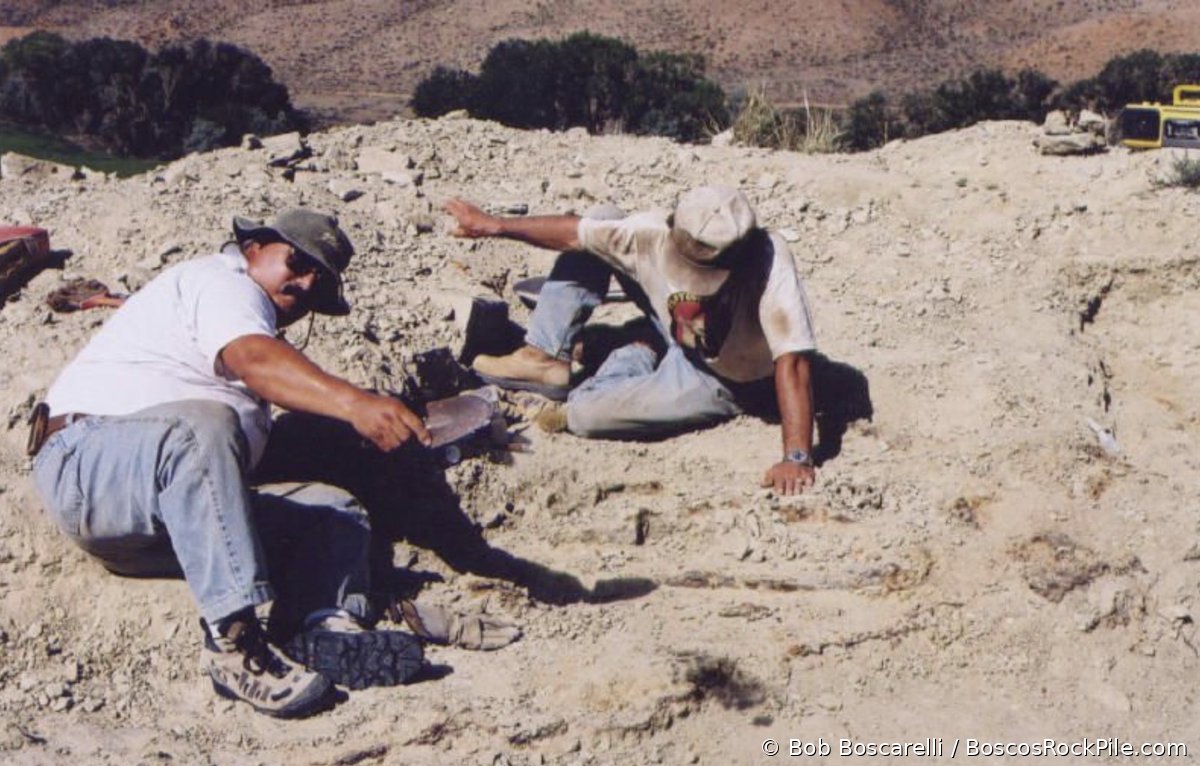
Discovery began in 2003. The first tail vertebrae were found at the end of that season, but the animal’s identity was still open. It was in July 2004, after the excavation resumed, that the diagnostic tail spikes — the thagomizer — were exposed and photographed, confirming the genus in the field.
The dig was at a DinoSafaris quarry near Shell, run by Bob Simon. It landed there partly by circumstance: Kirby Siber’s team had been locked out of their usual Wyoming site, the Howe Quarry, which redirected the season to Shell. The primary excavation of the Stegosaurus was carried out by Bob Simon, Don Pfister, and me — before Kirby Siber’s team arrived. Throughout the dig I also ran the DinoSafaris website as its webmaster, documenting the work as it happened.
Simon wrote his own account of that season on the DinoSafaris site while it was underway:
“Late in July, 2004, my two volunteers (Robert Boscarelli and Don Pfister) and myself began exploring an area in which I had unearthed 13 articulated Stegosaurus vertebrae the previous year… The tail spikes were found immediately as were a few plates and then the fun began. After a week and a half of very careful excavation, we had uncovered approximately 80% of an articulated Stegosaurus. … My volunteers left late July… Good fortune soon appeared as a paleontologist arrived in the area, with an experienced digging crew, needing a place to work.”
— Bob Simon, “The Story of Sarah Stegosaurus,” DinoSafaris.com, 2004 (archived)
That is the sequence: three of us had roughly four-fifths of the animal out of the rock; Kirby Siber’s crew arrived after we left and finished the jacketing.
Identification in the field came the way it usually does — not from obvious bone at first, but from iron-staining and a change in matrix texture, then the first dermal plates, and finally the unmistakable tail spikes. The two-week dig covered excavation, stabilization, mapping, and jacketing in hard Morrison matrix, in mountainous terrain, hot and dry, with the crew housed in a log cabin.
Among the visitors at the quarry was Dr. Paul Sereno, who came to see the excavation firsthand. A Torvosaurus tooth was recovered nearby as an associated find — not part of Sarah’s skeleton, but from the same ground.
The animal was named “Sarah” in the field, after Sarah, the daughter of rancher John “Ed” Anderson, whose Red Canyon Ranch hosted the Shell digs. After the fossil was sold and prepared, it was renamed “Sophie” in London by the museum’s largest donor, for his own daughter. Today it is on display at the Natural History Museum, London — one of the most complete Stegosaurus specimens ever found, and the first used to scientifically estimate the body mass of a Stegosaurus.
One animal, two names, one dig. (“Sundance” in some older captions refers to the Sundance Formation — a marine unit of belemnites and oysters — not a second animal and not a second dig.)
The specimen today
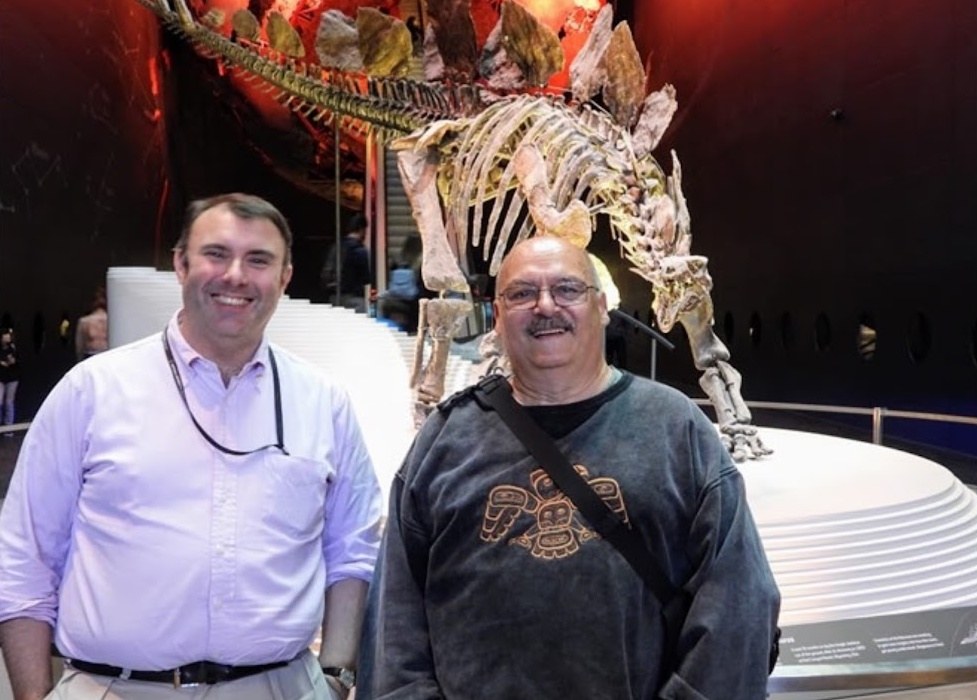
The Natural History Museum calls her the world’s most complete Stegosaurus — and the first complete dinosaur specimen to go on display there in nearly a century. By the museum’s own account the skeleton carries over 300 bones, was found “virtually complete… with only the left arm and base of the tail missing,” and stands 560 cm long by 290 cm tall — about the size of a 4x4. The museum dates the discovery to spring 2003 at the Red Canyon Ranch in Wyoming, by Bob Simon, and records that it took three weeks of excavation to bring the remarkable discovery to light. Simon’s own account of that season puts the first week and a half of those three weeks on his two volunteers and himself.
She arrived in London in December 2013 and went on permanent display in December 2014, renamed for Sophie Herrmann, daughter of the donor who funded the acquisition.
- World’s most complete Stegosaurus goes on show — Natural History Museum press office
- Stegosaurus brought to life — Natural History Museum
- Maidment et al. 2015, “The postcranial skeleton of an exceptionally complete individual of Stegosaurus stenops” — PLOS ONE (open access), the specimen’s formal scientific description
Sophie has gone on to a life of her own — scientific papers, museum crowds, even a children’s song. Not bad for a summer’s work in Shell, Wyoming.
Field photographs
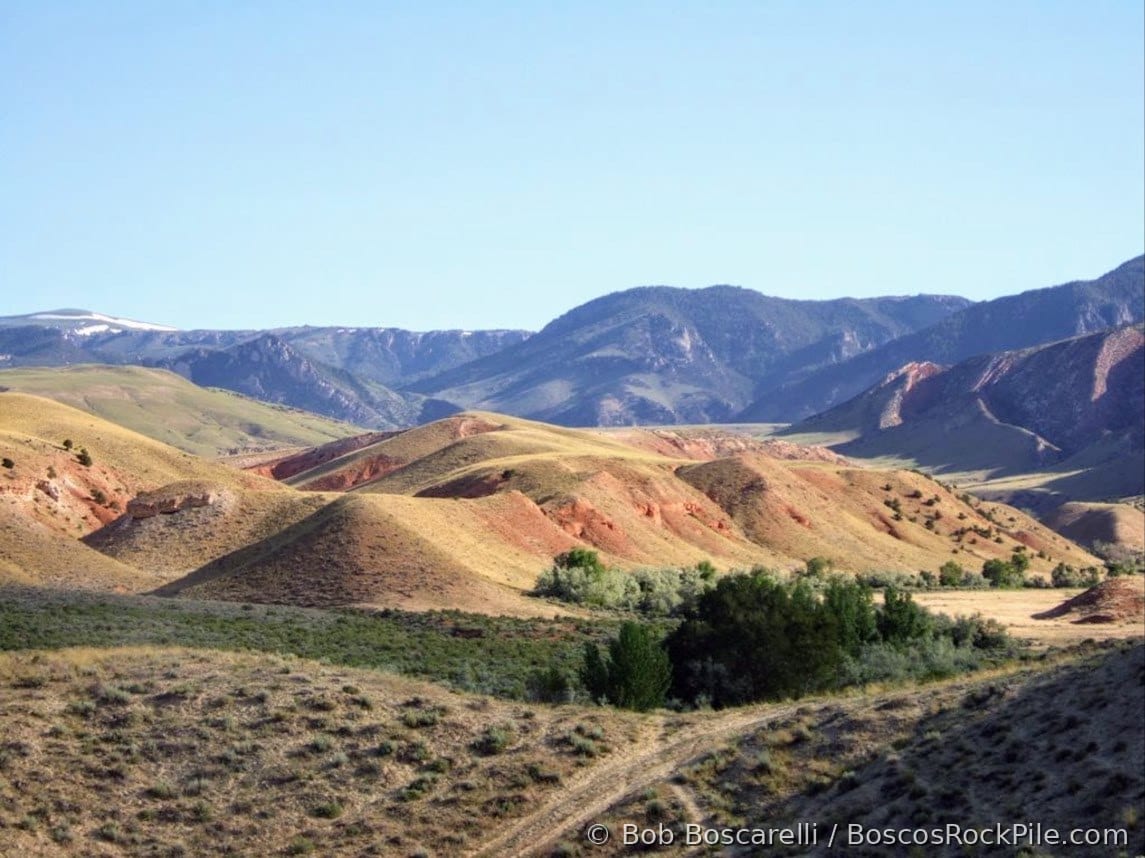
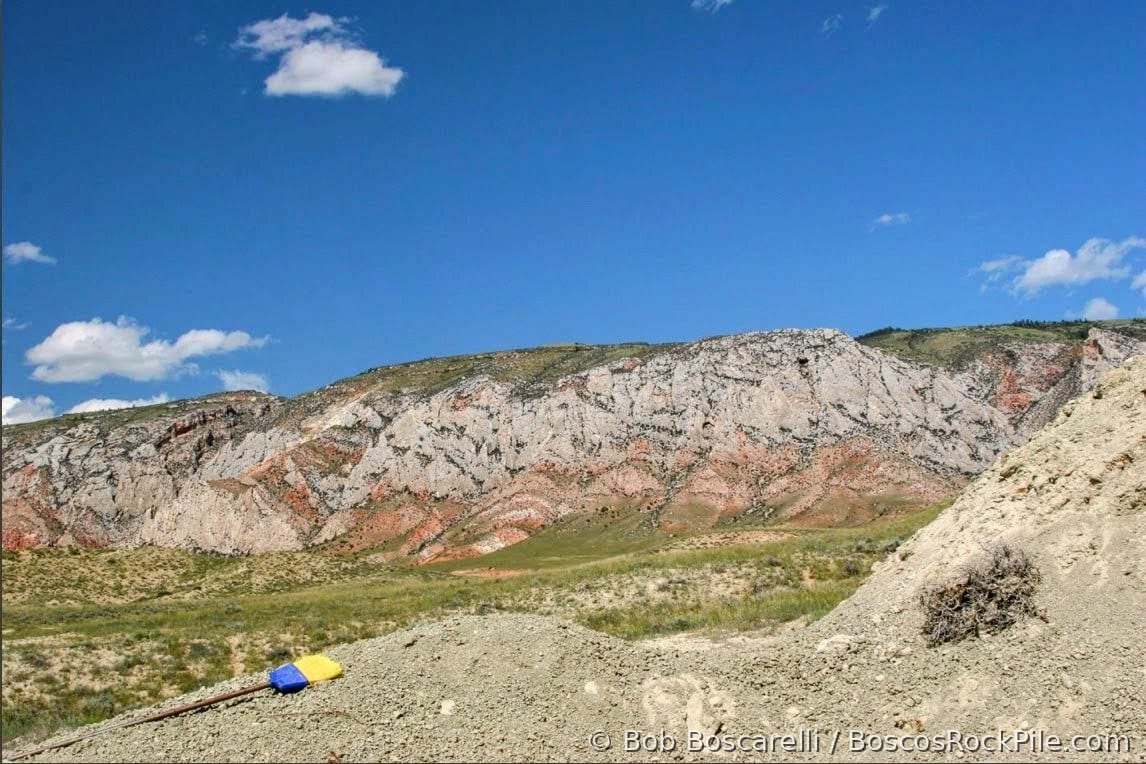
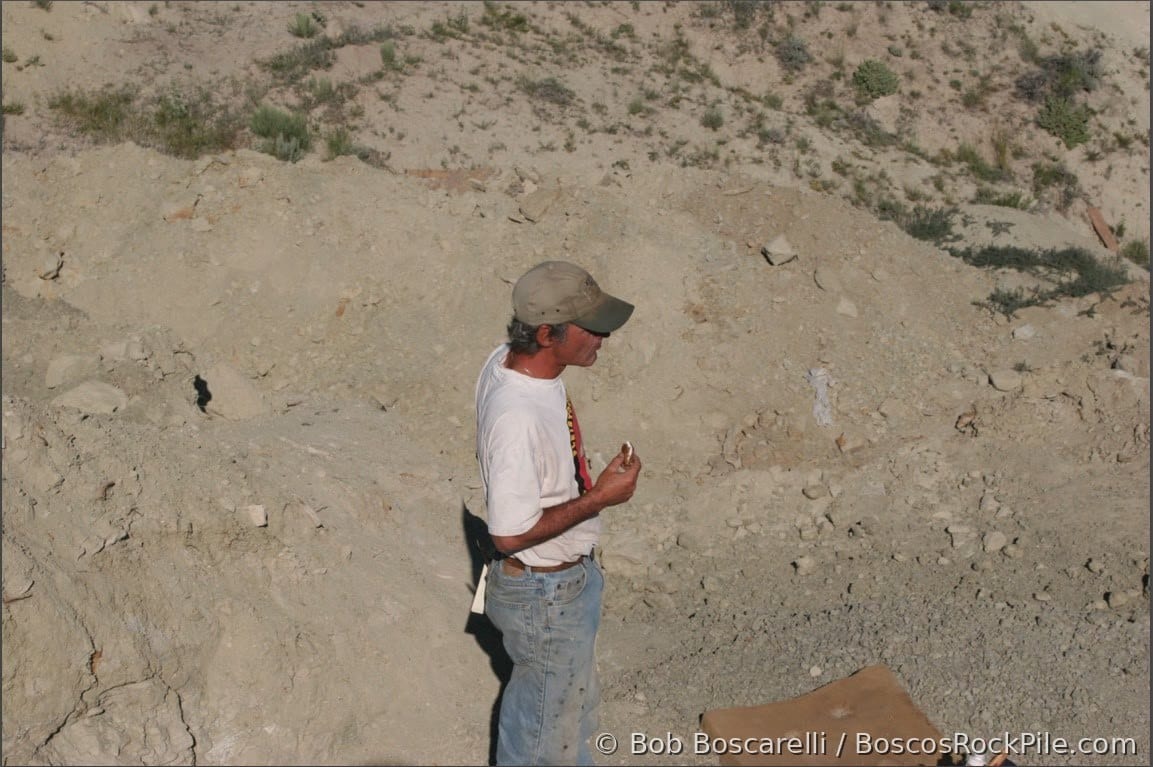
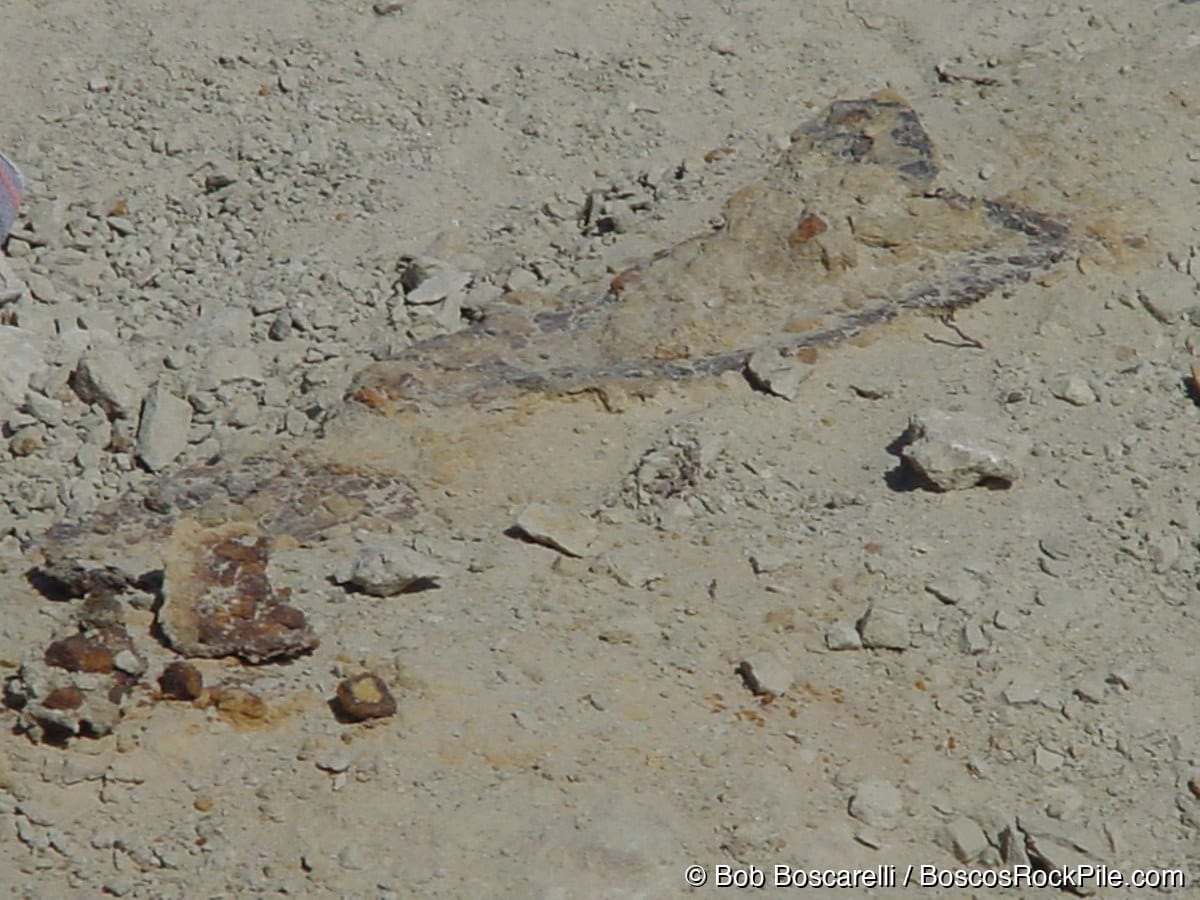
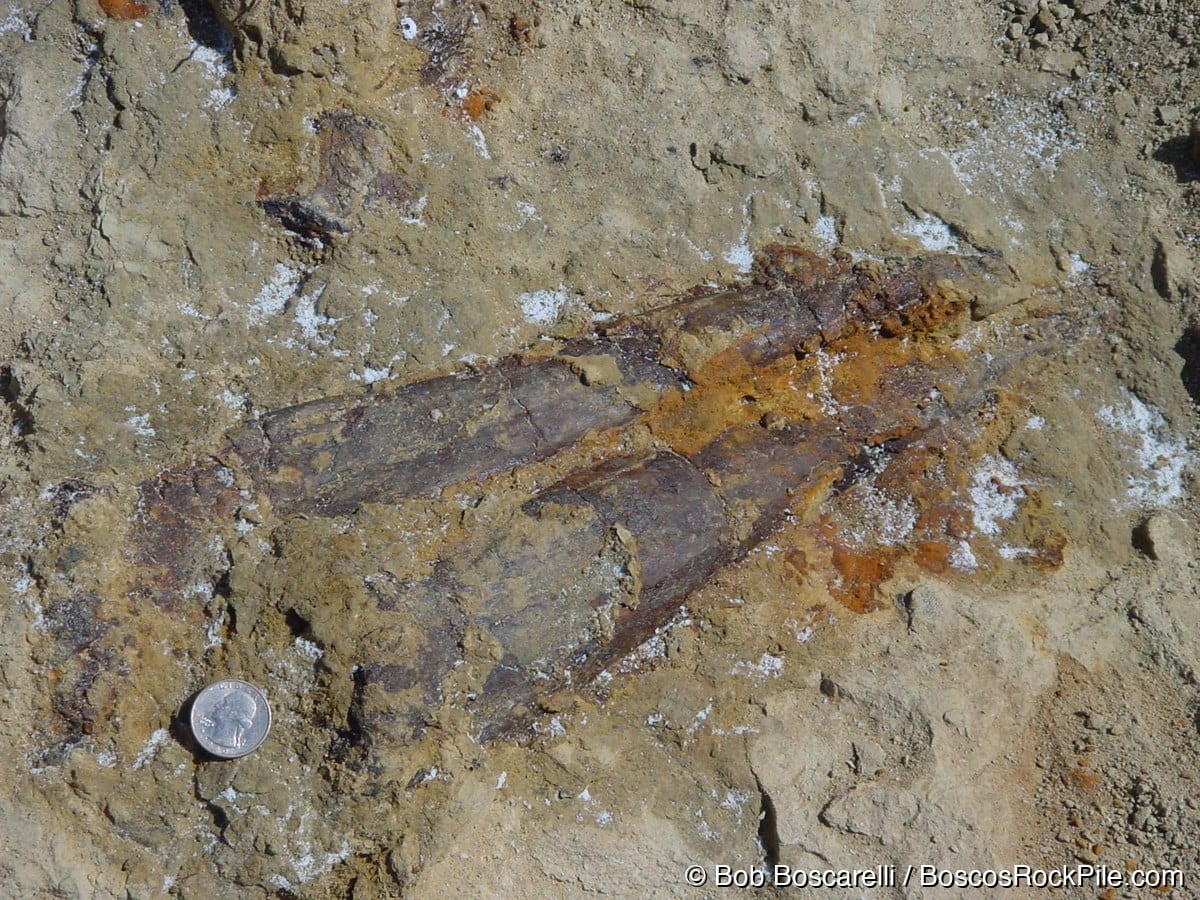
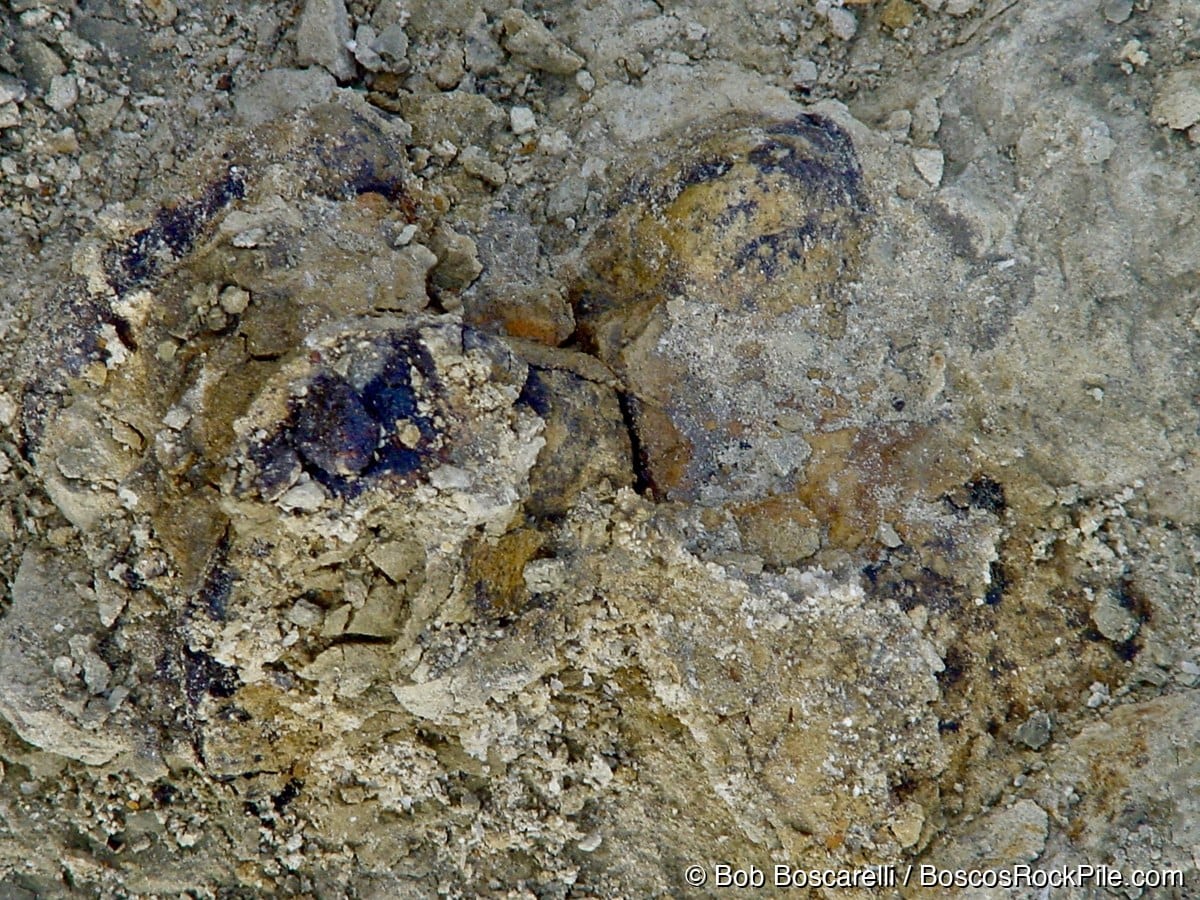
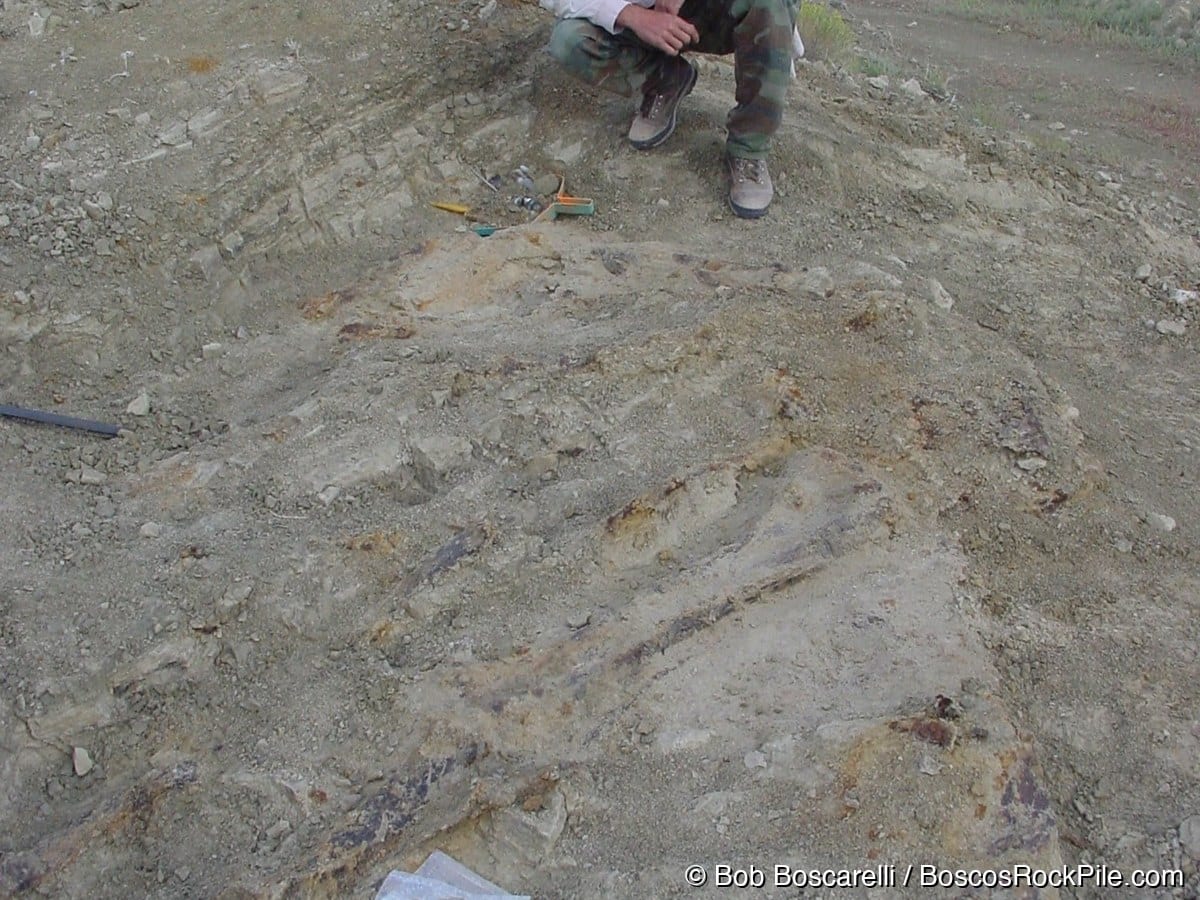
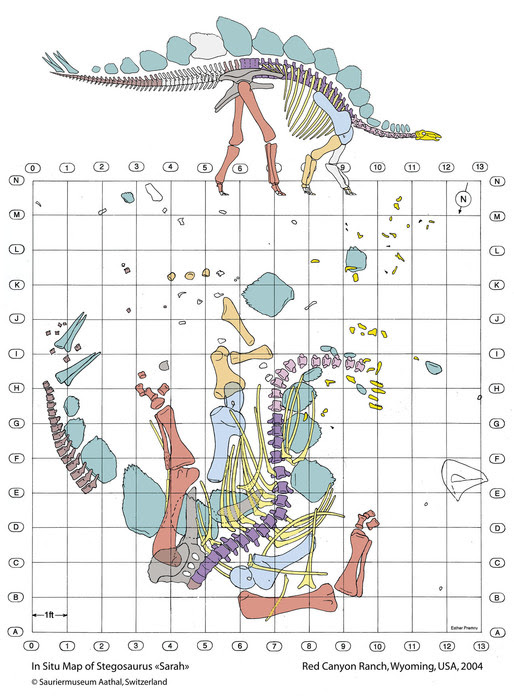
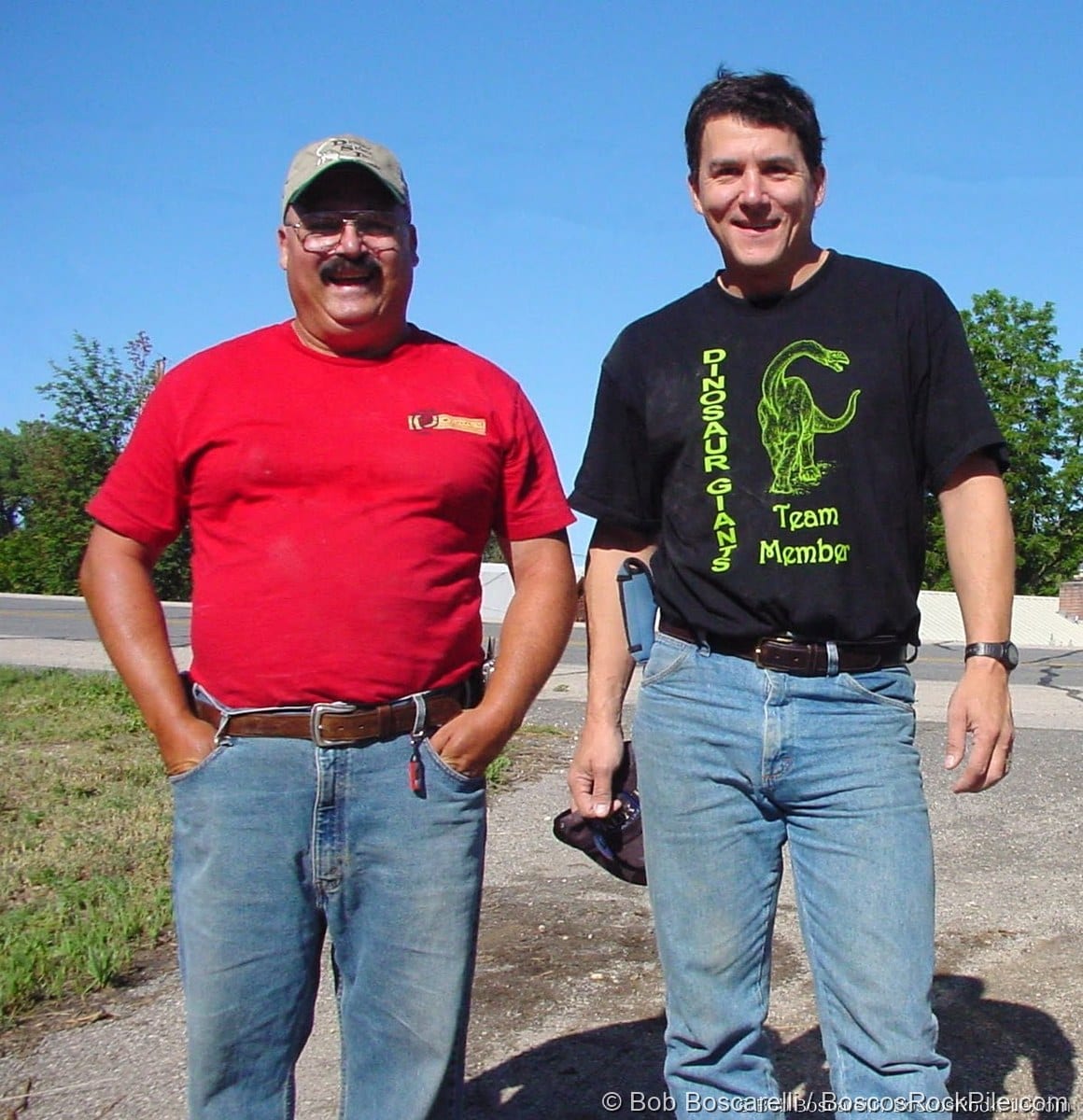
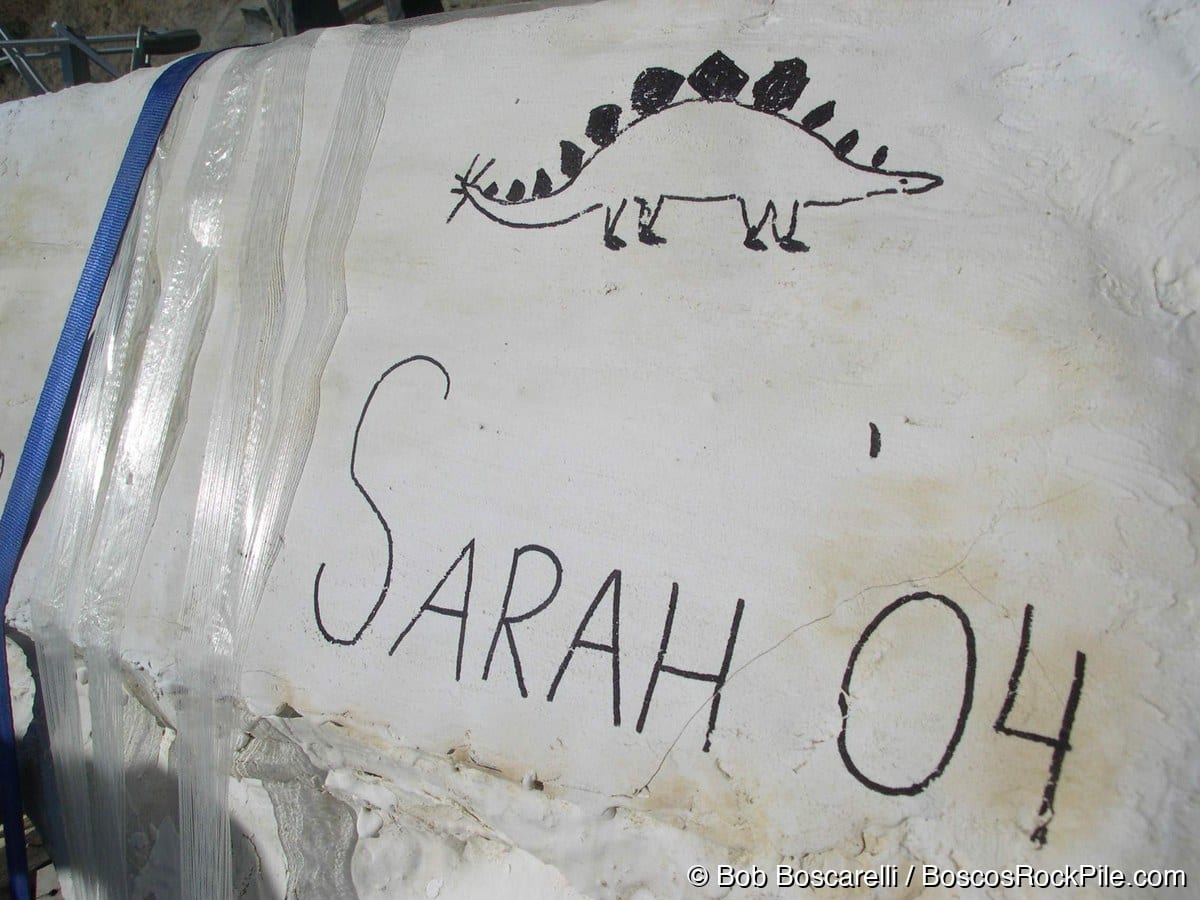
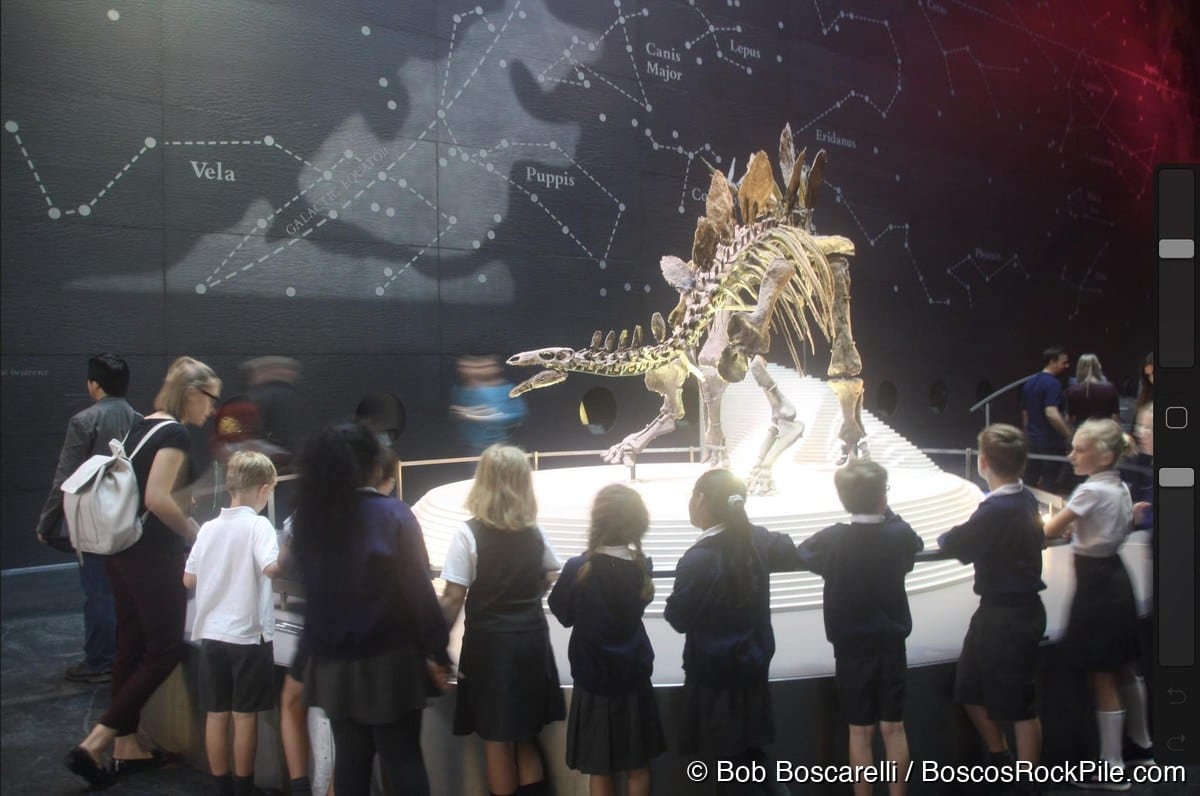
Image Licensing & Research Inquiries
Specimens and field photography from this archive are available for research, publication, and museum use. Get in touch to discuss licensing or collaboration.
Start a licensing inquiry